
If you’re here, it’s because you want to be safe when earthquakes happen.
There are a few simple, life-protecting ways to be safe.
Prepare
There are things you can do now to be safe when an earthquake happens.
Get Earthquake Early Warning Alerts
Check your phone’s settings and ensure multiple ways to get alerts.
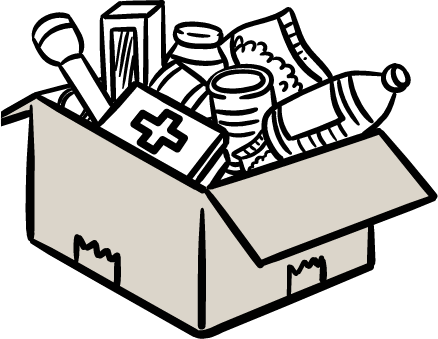
Secure Your Space
Reduce hazards around you and gather what you may need to evacuate or shelter in place.
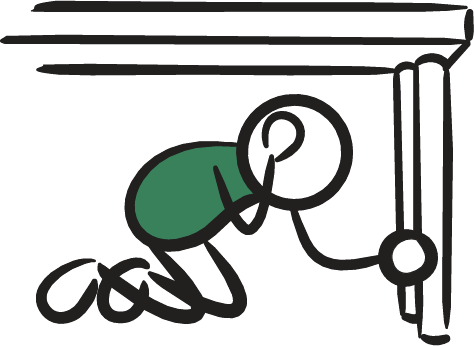
Practice
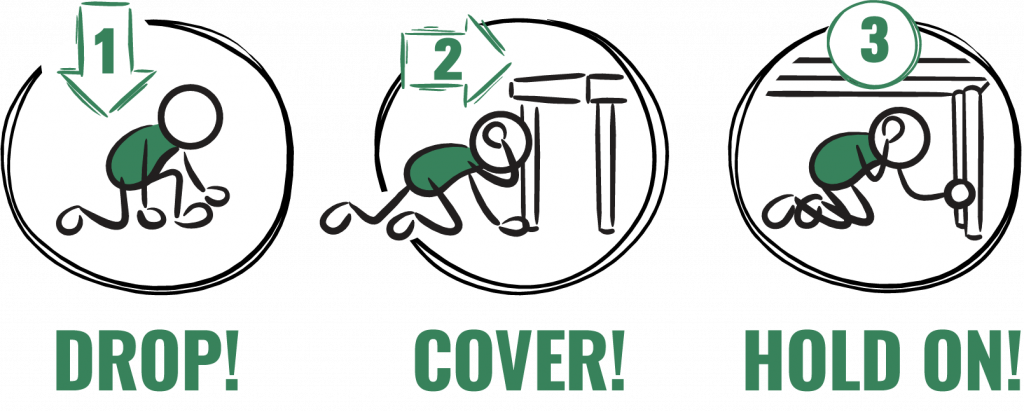
Practice Drop, Cover, and Hold On so you’re ready to act when you feel shaking or get an alert.
Help Your Community Prepare!
Respond
There are ways you can be safe during an earthquake in different environments.
In many cases, the protective action is to Drop, Cover, and Hold On (preferably under a nearby table or desk), but protective actions can look different for different situations. You may need to take a modified protective action.
Examples of Modified Protective Actions
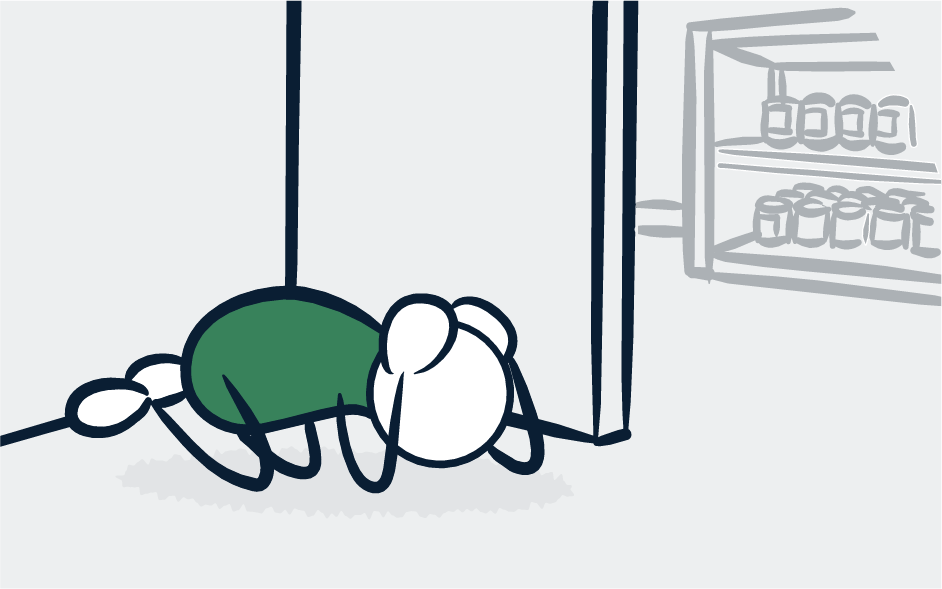
Indoors
No table or desk nearby? Crawl next to an inside wall and cover your head and neck with your arms and hands. Hold on until shaking stops.
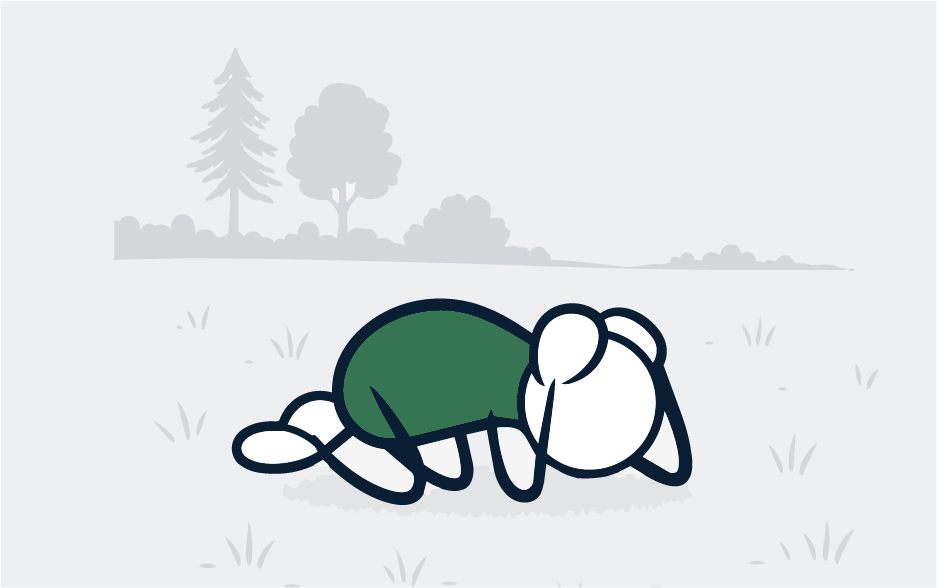
Outside
Move to an open space, away from buildings and tall objects. Know the signs in nature that may signal that strong shaking may be approaching.
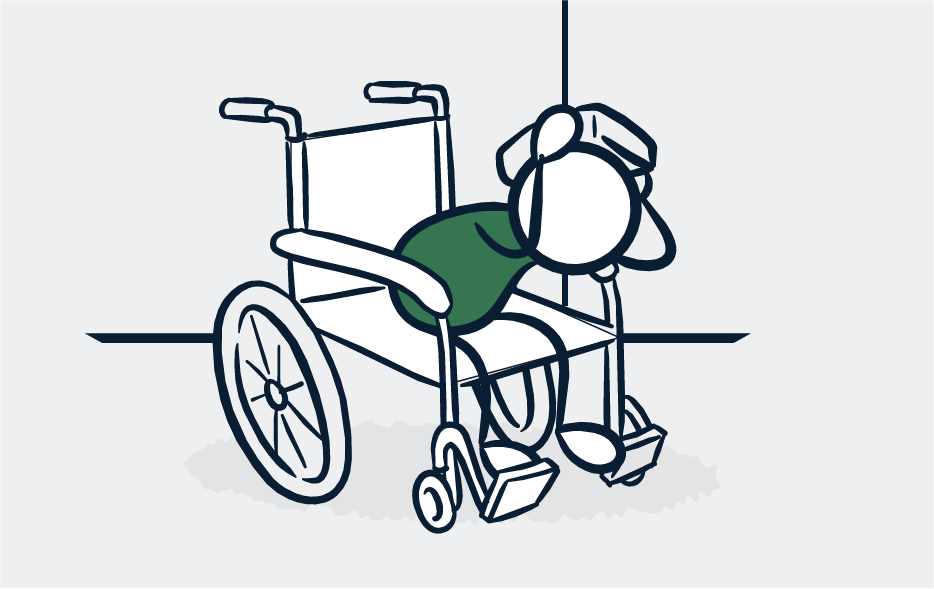
Limited Mobility
Use a wheelchair or walker? Lock the wheels, bend forward, and cover your head and neck with your arms and hands. Hold on until shaking stops.
Immediately After the Shaking Stops
There are things you can do immediately after the shaking stops to be safe.
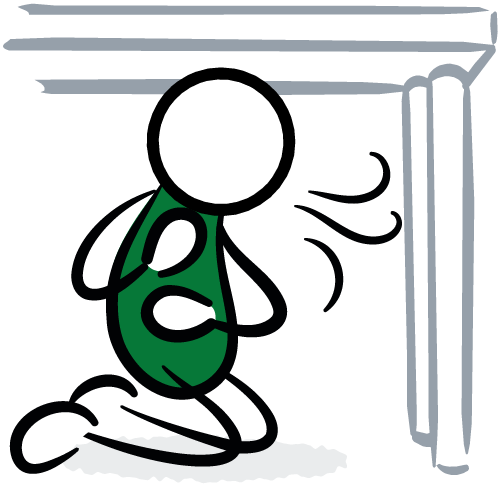
Breathe
Take a moment to steady yourself before you act.

Survey for Safety
Check yourself for injuries and assess your surroundings for damage and immediate hazards before you move.

Be Ready for More Shaking
More earthquakes may occur. Be ready to Drop, Cover, and Hold On again.